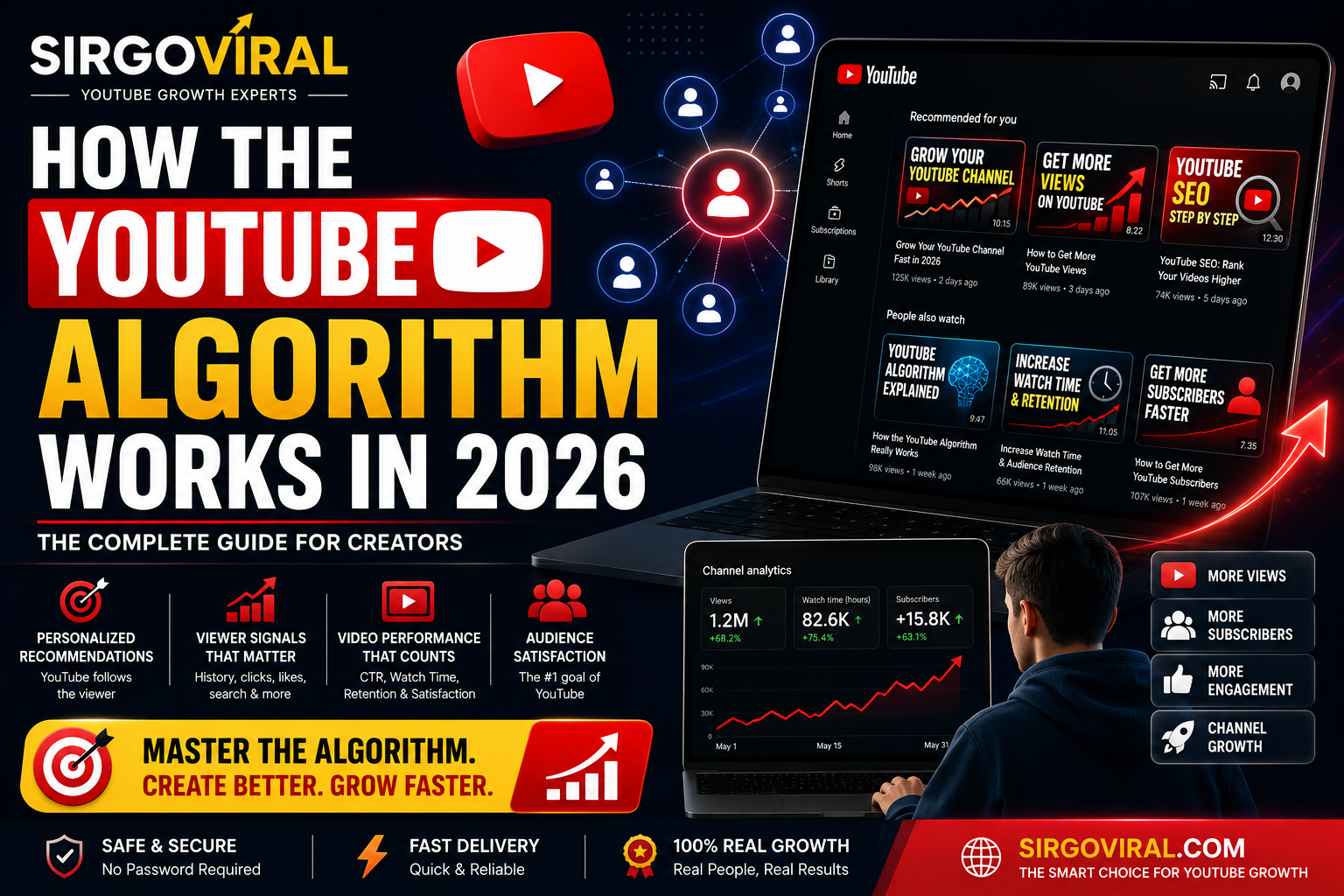
How the YouTube Algorithm Works in 2026
If you've ever uploaded a YouTube video and wondered:
"Why did YouTube recommend this video but not mine?"
You're not alone.
Many creators think there is one mysterious "YouTube algorithm" that decides which videos go viral.
The reality is more interesting.
YouTube uses recommendation systems to match individual viewers with videos they are most likely to watch and enjoy. The system considers the viewer, the video, and how people respond when the video is shown to them.
So how does it actually work?
1. YouTube Follows the Viewer
One of the biggest misconceptions is thinking that YouTube simply chooses a list of "best videos" and pushes them to everyone.
It doesn't work that way.
Recommendations are personalized.
Two people can open YouTube at the same time and see completely different videos because their viewing histories and interests are different.
That's why a video can perform extremely well with one audience while barely attracting another.
2. Viewer History Matters
YouTube looks at signals such as:
- Videos someone watches
- Searches they make
- Channels they subscribe to
- Videos they like or dislike
- Content they ignore
- "Not interested" feedback
These signals help YouTube understand what each viewer is interested in.
For example, someone who regularly watches programming tutorials is more likely to receive programming-related recommendations.
3. Your Video's Performance Matters
When YouTube shows your video to someone, the system observes what happens next.
Do they:
Click and watch?
Or:
Ignore it and move on?
And after clicking, do they actually stay and watch?
YouTube groups performance signals into three broad areas:
Appeal → Engagement → Satisfaction.
That's why getting a click isn't enough.
You need to deliver what your title and thumbnail promised.
4. Watch Time Is Important—but It's Not Everything
Watch time matters because YouTube wants viewers to find content they actually enjoy.
But there's an important distinction.
A video having a long watch time doesn't automatically mean YouTube will recommend it everywhere.
YouTube also considers things such as average view duration, average percentage viewed and viewer satisfaction.
The goal isn't simply:
"Make people watch for as long as possible."
It's:
"Make something people genuinely want to watch."
5. YouTube Home Works Differently From Search
YouTube has several discovery surfaces.
The Home page is heavily personalized based on the viewer's history and interests.
Suggested/Up Next recommendations are influenced by what the viewer is currently watching and what they're likely to watch next.
Search works differently because it tries to match the viewer's query with relevant videos.
This is why SEO is particularly important when you're trying to capture search traffic.
6. Your Title and Thumbnail Matter
Your thumbnail helps create the initial appeal.
Your title tells the viewer what the video is about.
Together, they influence whether someone chooses to watch when the video is presented to them.
But don't use misleading titles or thumbnails.
If viewers click and quickly leave because the video doesn't deliver what was promised, you've created a poor viewer experience.
7. YouTube Considers Topic Interest
Sometimes your video isn't performing badly.
The topic simply has a smaller audience.
YouTube explains that topic interest can influence how many people see a video. Some subjects naturally have a much larger potential audience than others.
For example, a video about a globally popular event may have a much larger potential audience than a highly specific niche tutorial.
8. Competition Can Limit Your Reach
Imagine your video has good metrics.
That still doesn't guarantee huge impressions.
Why?
Because your video is competing against other videos that a viewer might want to watch.
YouTube says competition can affect impressions even when your own video's performance is strong.
That's why constantly comparing your current video with your previous video isn't always enough.
You're competing for viewer attention across the platform.
9. Don't Try to "Hack" the Algorithm
There isn't a magic upload time, secret hashtag or special button that guarantees YouTube will push your video.
The better approach is to understand your audience.
Ask:
What does my audience actually want to watch?
Then create content that delivers it.
YouTube itself recommends focusing on what your audience enjoys rather than trying to figure out how to "please the algorithm."
10. One Bad Video Doesn't Automatically Kill Your Channel
This is particularly important for creators.
If one video performs badly, that doesn't automatically mean YouTube will stop recommending your entire channel.
YouTube says recommendations rely heavily on video- and audience-level signals, meaning an individual video's underperformance doesn't automatically penalize the whole channel.
So don't panic when one upload flops.
Study it.
Learn from it.
Make the next one better.
How to Work With the YouTube Algorithm
Instead of asking:
"How do I trick the algorithm?"
Ask:
1. Will my audience want this video?
2. Will they understand what it is from the title and thumbnail?
3. Will the opening make them want to continue?
4. Does the video actually deliver what I promised?
5. Would they want to watch another video afterward?
If you consistently answer those questions correctly, you're working with YouTube's recommendation system rather than fighting it.
💡 Pro Tip
Don't obsess over one metric.
A video with a strong click-through rate but poor viewer retention has a different problem from a video with excellent retention but weak appeal.
Look at the complete journey:
Impression → Click → Watch → Continue Watching → Satisfaction
That's a much more useful way to understand your YouTube Analytics.
Final Thoughts
The YouTube algorithm isn't simply looking for videos to make viral.
Its goal is to help individual viewers find content they're likely to enjoy.
That means your best strategy isn't trying to discover a secret algorithm hack.
It's understanding your audience, choosing strong topics, creating compelling packaging and making videos that satisfy viewers.
Create for the audience first—and let the recommendations follow.
🚀 Want to Grow Your YouTube Channel?
Building a YouTube audience takes time, consistency and great content.
If you're looking to give your channel additional momentum, Sirgoviral provides YouTube growth services including views, subscribers and engagement solutions for creators and businesses.
Ready to grow your YouTube presence? Visit Sirgoviral and get started.
Frequently Asked Questions
Does YouTube have one algorithm?
YouTube uses multiple recommendation and ranking systems across different surfaces such as Home, Suggested Videos and Search. The signals used can differ depending on where the viewer encounters the content.
What makes YouTube recommend a video?
YouTube considers viewer personalization and how viewers respond to videos, including whether they choose to watch, how long they watch and whether they appear satisfied.
Does watch time affect YouTube recommendations?
Watch time and viewing duration are among the signals YouTube uses to understand video performance, but they are not the only factors.
Does one bad video hurt a YouTube channel?
Not automatically. YouTube says an individual video's underperformance doesn't automatically penalize the entire channel.
Does YouTube favor certain video formats?
YouTube says its recommendation system doesn't inherently favor a particular format. Performance and viewer personalization are important.
📚 Related Articles
For this article, we'll use 5 relevant links, not all 10:
- How to Get More YouTube Views
- Why Your YouTube Videos Are Not Getting Views
- YouTube SEO: How to Rank Your Videos
- How to Increase YouTube Watch Time
- How to Get More YouTube Subscribers
 Dashboard
 Orders
 Add Funds
 Support
 Profile